Sunday, 3 July 2022

Canfranc... to France


In July 1928 a remarkable train station opened just south of the Spanish French border in the Pyrenees at the end of the Somport railway tunnel which had been completed 13 years earlier. The small, previously isolated, village of Canfranc was at once transformed into an international hub of activity. It was also dwarfed by the monumental scale of the building and its sidings where standard gauge French trains pulled in and wider gauge Spanish trains departed toward Madrid and beyond.


During the Spanish Civil War Franco ordered the Spanish side of the Somport tunnel to be sealed but because of the Franco-Spanish international convention under which it was built, the Spanish station itself remained open It was also extensively used by international traffic during the second world war when it was known as the Casablanca in the Pyrenees. Freight trains carried tungsten ore north and French grain along with Swiss gold headed south. Passenger services continued during the war providing an escape route into Spain for Jews and Allied soldiers.


The station remained a major hub for cross-border railway traffic until 1970 when a train derailed in France damaging a key bridge severing the line. Subsequently it remained in use locally with the occasional Spanish train stopping, but its cross border days were over… or so it was thought.


In February 2020, funding for both the relaunch of international services and the station's rehabilitation was made available by the European Union and it’s currently undergoing major restoration. The opening of the railway involves the owners of the station; the government of Aragon, to work with the government of Aquitaine. The station building is being transformed into a hotel and conference centre. From what we could see workmanship is very good, and it would truly be an incredible place to host a conference!


Canfranc is set high up in the pyrenees, on the border with France with a river running through it. If you ever get the chance, do stop off, have a look, before heading towards the tunnel into France.

We did exactly that although the road to reach Canfranc wasn’t quite as expected. We knew the tunnel was still a major crossing for heavy goods vehicles, so we were expecting the motorway to go all the way there, but it didn’t! There we were driving along admiring the scenery when suddenly we noticed huge concrete barriers across the road, totally blocking the motorway. With no warning, the motorway ended and we were diverted off down a small steep road wiggling its way through villages, around lakes and over rivers. For a good few miles we pondered what was happening, but the lorries occasionally came the other direction so we presumed we hadn’t gone wrong. Just as suddenly as it started the road shot up a slipway back onto the motorway and we realised the bit to join the two ends hadn’t been built! Such a Spanish way to deal with a problem! No road, no problem, send the juggernauts through the villages, it’ll be fine!


However leaving Canfranc was simpler, follow the signs to the Somport tunnel and off you go. We’ve been through a fair few tunnels on this trip, but this was the big one. At 5.3 miles long (opened on 7 February 2003) this one takes a while to get through! We’d heard it can get really busy, but as you can see, we were alone for most of the journey. It curves, undulates and goes on and on, it’s an eerie feeling being along driving under a mountain for so long.


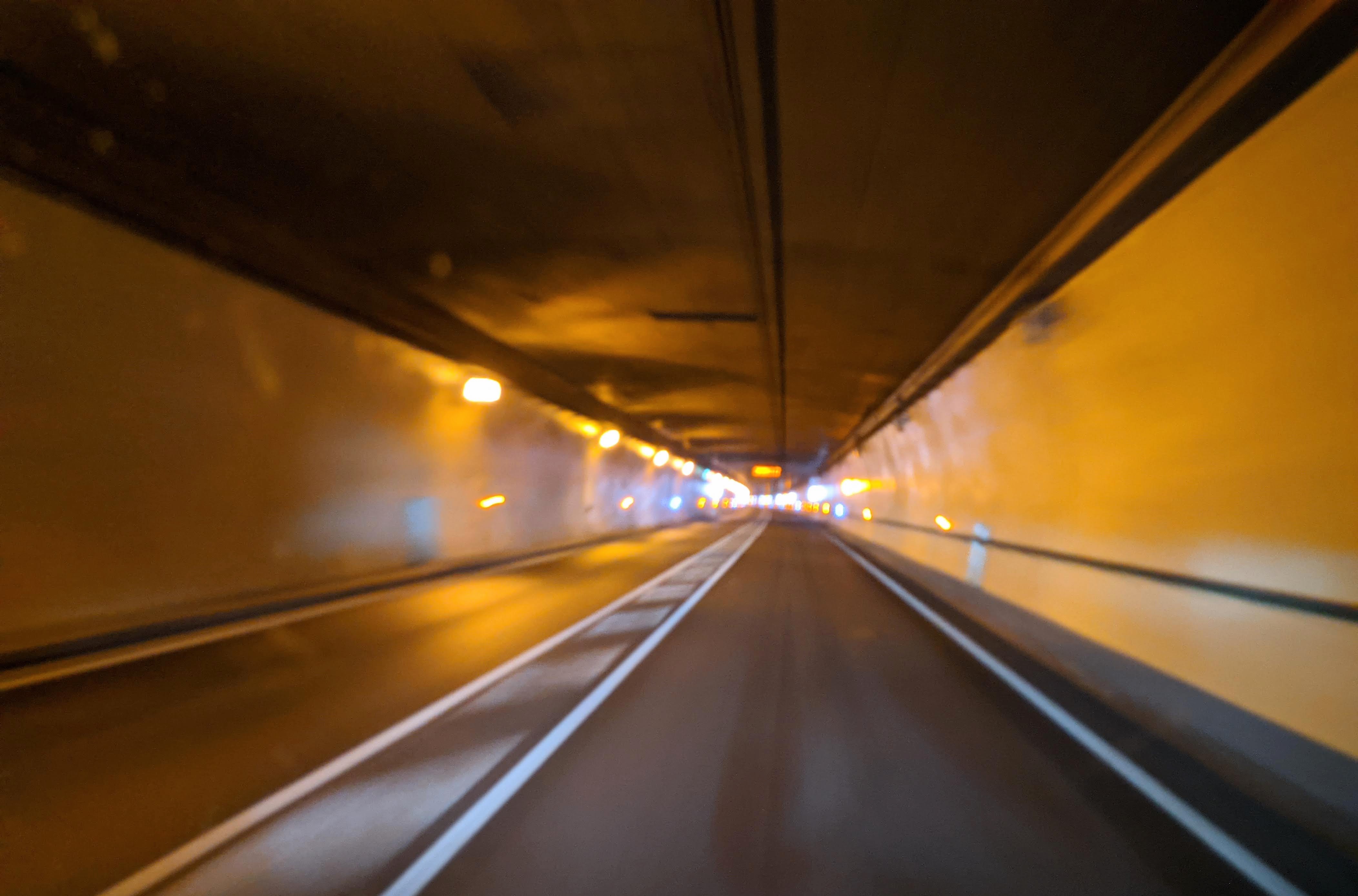


As you near the end of the tunnel you see a speck of light getting bigger and bigger and you pop out into the sunlight and a very different place. On the French side the road narrows, winds, and cuts through gorges and the temperature dropped, significantly.


We were able to spot some of the train lines and tunnels being restored to enable the cross border trains. We had intended to stop soon after the crossing to visit a bear sanctuary, but having seen the gradient of the road, we didn’t! Maybe in a car it would be fine, but we weren’t keen to put Agy, or us, through that!


Sunday, 26 June 2022

The Silver Route

We’ve had enough, we just can’t stand the heat any more. However much we drink, we just can’t get enough fluid into us and we are feeling rough. There are so many places we want to visit, but when we do, we just can’t appreciate their treasures because we are dehydrated and just too hot. Cooking is nigh on impossible because it just heats up the van even more and we aren’t really hungry, we are snacking, but not really eating proper meals. So we made a decision, we are going as far north as we can in a single day, aiming for one of the places on our ‘must see’ list that we thought would be a few weeks away.

To get there we drive Vía de la Plata (The Silver Route). Despite its name, was never a road connected to the silver trade, it’s thought to have got its name due to phonetic confusion. It was originally called al-Balat (the paved road), and it is thought that this pronunciation led people to transfer the sound to Plata (silver)l. Whatever changed its name, it was first called the Via de la Plata on a document written between 1504 and 1507, by Christopher Columbus, so it’s been a while!


The Vía de la Plata has become increasingly popular as an alternative to the French route for pilgrims heading to Santiago de Compostela and today much of it is incorporated into the Spanish route 66 motorway. It is a stunning drive. People say don’t use the motorways and toll roads, drive the slow route, see Spain, but today we needed to really clock up the miles and as we drove we saw stunning scenery on an empty road. The further north we got the cooler it got, the snow poles marking the edges of the road appeared and the snow capped mountains of the Pyrenees greeted us.


Ian drove 475 miles in about 8.5 hrs. When we pulled up to a tiny campsite just as reception was closing we opened the door with a big sigh of relief, it was a cool 27 degrees, and we could breathe and sleep easy that night!


Sunday, 19 June 2022

Melting in Mérida


When we travel we don’t often have a plan, we might have a rough idea of where we want to go and when we need to get home, but more often than not we decide on the hop where we should go next. We meet people, hear about their travels and are either inspired or become determined to avoid places.


Having loved the history of Córdoba Ian suggested we head north west to Mérida before continuing our journey north. I’d never heard of Mérida, but when Ian suggests something, there is usually a good reason… and there was!

We found a car park at the local out of town shopping complex and made our way to the city winding our way through local housing popping out from the gloom of the small side streets into bright sunshine by the banks of the river Guadiana facing a stunning Roman bridge. It’s huge and still in use every day. A taste of what was to come.

We had been hoping that as we headed north, the temperature would head south, but it didn’t! Walking across the bridge and then uphill into the old town without shade in this heat is not fun, but the climb was worth it.


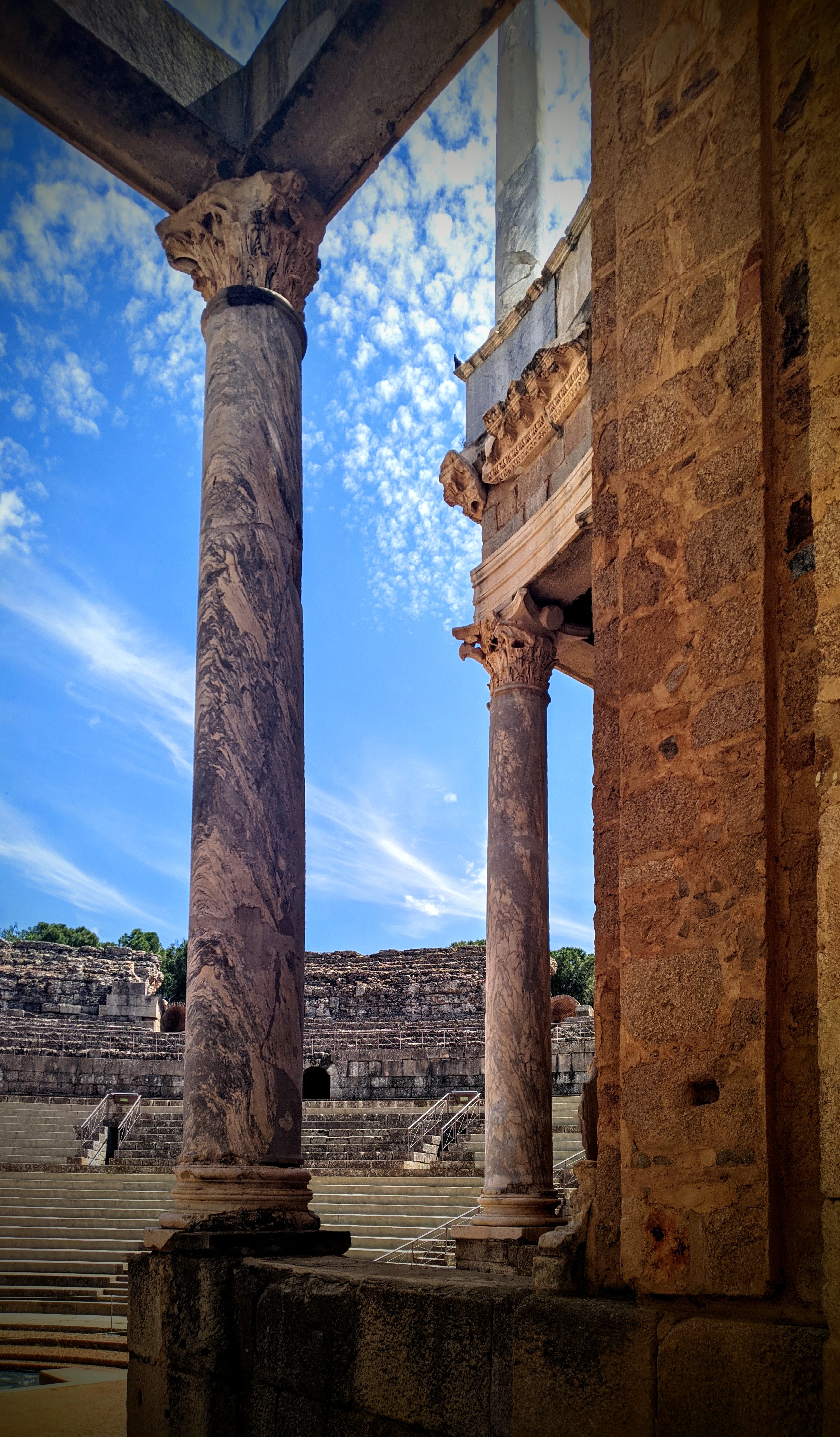
Mérida is home to a roman theatre that was constructed in 15-16BC and seated around 6000 people although has been reconstructed several times (starting in the 1st or 2nd century, right through to today) it is part of the best and most extensive archaeological sites in Spain. It’s stunning and well worth a visit.


Behind the stage is a garden surrounded by columns that was used as a recreational area. The theatre is still in use as the home of the Festival de Mérida ( a classical theatre festival), which is held in September. Hopefully it would be cooler then, as there is no way anyone could watch a whole play in the glare of the sun in this heat, never mind perform!


Beside it is the Amphitheatre built in around 8BC seating 15,000 people built to stage gladiatorial contests and beast hunts. There doesn’t seem to be a current gladiatorial contest thankfully!


There’s plenty more to see in Mérida, but the other sites were closed when we visited, so maybe it’s somewhere to return to and explore over a couple of days.


We continued our journey north to Cáceres, a mediaeval walled city and another UNESCO world Heritage site. Cáceres is interesting, and although deserted when we visited, it is a popular place to visit. However, by this point the heat was getting to us. Several weeks of consistently being over 30 degrees was taking its toll. We had a quick walk round, a drink and a bit of Tapas and headed back to the Agy. We had some decisions to make.


However, by this point the heat was getting to us. Several weeks of consistently being over 30 degrees was taking its toll. We had a quick walk round, a drink and a bit of Tapas and headed back to the Agy. We had some decisions to make.


Sunday, 12 June 2022

Feeling it, in Córdoba


That feeling I talked about in Saville, or actually talked about not having. Well, Córdoba has it in spades.


We’d been recommended to stop off and spend some time in Córdoba by Ian’s brother and when I mentioned it to another friend,  they said how much they love it, so it turned into a must do. And so it was!


It had been a Roman settlement, which was later subject to  Muslim conquest when it became a world leading centre of education and learning, and by the 10th century it had become the second largest city in Europe following its Christian conquest. It has more UNESCO World Heritage sites than anywhere in the world, and I can see why. It is incredible!


You enter the walled city via small alleyways, archways and cut throughs packed with people, marching bands, cafes and shops. Then suddenly you stumble out into the sun and  the outer walls of the Mosque–Cathedral or  Mezquita rise up above you. Through the massive doorway you enter the central square of the former mosque.


Here we found the most incredible building where first impressions bring a sense of calm, a special place of Arabic history, with arches and mosaics and stunning ceilings. 


Further into the building the present day Christian influence is brutally juxtaposed with the original Moorish architecture. Catholic iconography sitting boldly next to Arabic mosaics. A Roman Catholic Cathedral within a former Mosque. Stained glass windows pouring glistening muiltcoloured light down onto the floor upon which Muslim worshipers once walked. It feels holy, awe inspiring and welcoming, and to top it off, a wedding was in progress. It was incredible.


A further meander through the streets found us in a little place that couldn’t have felt more Spanish. A waiter stood carving Iberian ham, on a marble bar with a deep blue tiled counter. It was time for a local beer. 


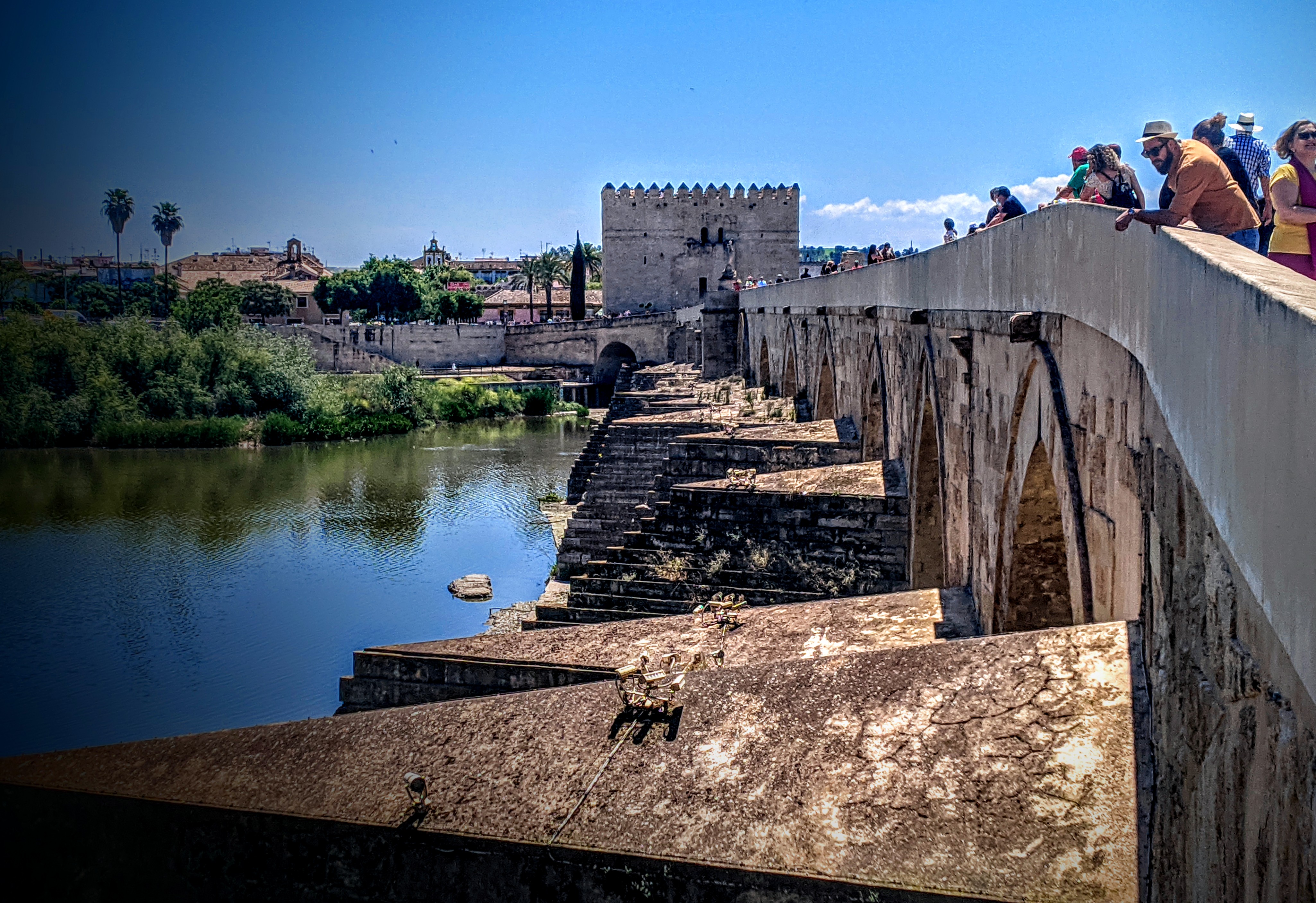
Heading outside the walls of the Mezquita we find the Roman bridge at the city gates, stop for another drink and get to experience the full meaning of the fact that  Córdoba has the highest summer temperatures in Spain and Europe, with average high temperatures around 37 °C (99 °F) in July and August. It is early May today, it's 34 degrees outside, but  when we get back to Agy she has reached a sweltering high of 45 °C.  We are melting, exhausted, but culturally enriched.  


Compare and contrast...Agy Van and Agy Van2

I hope for those of you of a similar age, that title didn’t cause flashbacks to O’level and A'level exams! We have been asked by a few p...